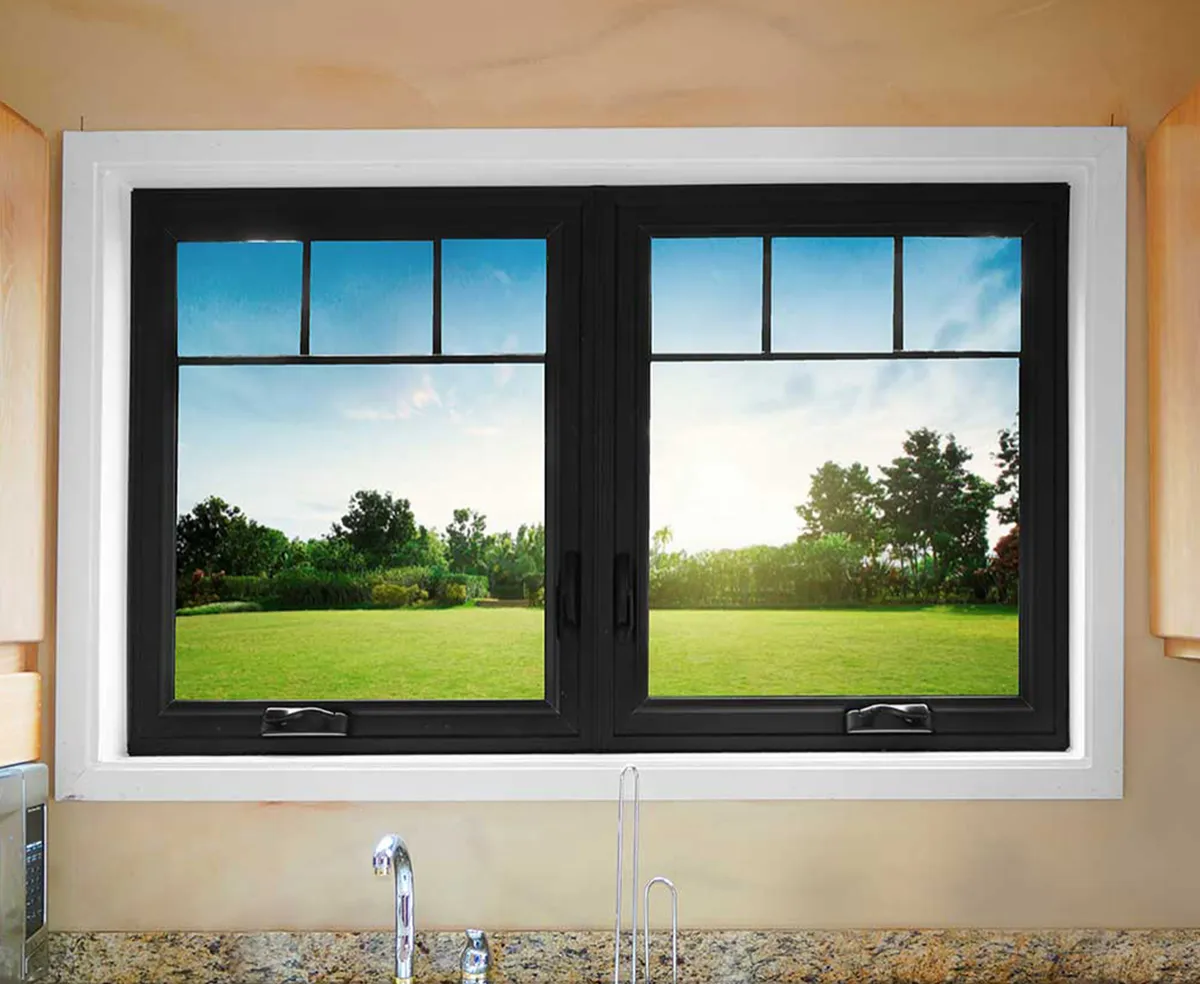
Double-Hung vs Casement Windows for Older Wheaton Homes
Photo courtesy of Midway Windows.
If you live in one of Wheaton's older houses, the windows are probably a big part of how the house looks from the street. When it is time to replace them, the first question most people ask is simple: should the new windows be double-hung, like the old ones, or casement?
Both are good windows. They open differently, they seal differently, and they fit different spots in a house. Here is how I walk homeowners through the choice, room by room.
How each window opens
A double-hung window has two sashes, one above the other. Both slide up and down in the frame. You can open the bottom, the top, or a little of each. A rail runs across the middle where the two sashes meet, and only half of the window is open at any time, because the other sash fills the rest of the opening.
A casement window is hinged on one side. You turn a crank and it swings outward, the way a door opens. The whole window moves out of the way, so there is no rail across the view and the full opening is clear for air.
That one difference, sliding versus swinging, explains most of what follows.
Keeping the look of an older house
Up-and-down sliding sash windows have been part of American houses for a very long time. The National Park Service notes that single- and double-hung windows came into use in the early 1700s, and that styles of these windows became tied to the periods when houses were built.
So if your house was built with double-hung windows, new double-hung windows keep the same lines from the street: the same meeting rail, the same up-and-down shape. That matters to a lot of people in older neighborhoods, especially on the front of the house.
You do not have to choose one style for the whole house, though. Many homeowners keep double-hung windows on the front and sides, and use a casement where it simply works better, like over the kitchen sink or on the back of the house.
Drafts and sealing
When a casement window closes, the crank pulls the sash in tight against the frame. A double-hung window seals with strips that the sashes slide past. A U.S. Department of Energy fact sheet on windows put it this way: windows that close against a compression seal, such as casements, allow about half as much air leakage as double-hung and sliding windows.
That does not mean a new double-hung window will be drafty. Any new window will feel very different from a worn-out one with gaps around the sash. But if one room has always been the cold one and air sealing is your top concern, a casement is worth a look for that room.
Over the kitchen sink
This is where casement windows shine. Lifting the lower sash of a double-hung window means leaning over the sink and the faucet to push up. With a casement, you stand at the counter, turn the crank, and the window swings open.
If you are planning a kitchen remodel too, that is the easiest time to change the window over the sink, because it can be planned with the new cabinets and counters. Our kitchen remodeling page explains how that work is run.
Walkways, decks, shrubs and air conditioners
A casement swings outward, so it needs clear space outside the wall. Before choosing one, picture it fully open. Will it stick out over a walkway where people pass? Will it hit a deck railing, a porch roof or a tall shrub? If so, a double-hung window is the easier fit, because it opens and closes inside its own frame.
The same goes for window air conditioners. A standard window unit sits in the opening of a double-hung window with the lower sash closed down on top of it. A casement window has no place for one. If a bedroom depends on a window unit every July, keep a double-hung window in that room.
Bedrooms and the size of the opening
Building codes set a minimum clear opening for bedroom windows so a person can get out in an emergency. The model residential code that many towns use (section R310 of the International Residential Code) calls for at least 5.7 square feet of clear opening, at least 20 inches wide and 24 inches high, with the sill no more than 44 inches off the floor. Your town's version of the code is the one that counts.
Because a casement swings all the way open and a double-hung window opens only halfway, a casement gives you a larger clear opening in the same size frame. If you are replacing a bedroom window, ask about the opening size at the visit.
Cleaning upstairs
Many double-hung windows have sashes that tilt in toward the room. You tilt the sash, wipe the outside glass while you stand inside, and tilt it back. That helps on a second floor, where a ladder is a poor way to wash windows. Not every double-hung window tilts, so ask about it before you order.
Screens differ too. A double-hung window's screen sits on the outside. A casement swings out, so its screen sits on the inside.
A quick way to decide
Front of an older house, where you want the original look: double-hung.
Over the kitchen sink or behind a counter: casement.
Window opens onto a walkway, deck or tight landscaping: double-hung.
Room that needs a window air conditioner: double-hung.
Room where a draft is the main complaint and the outside is clear: casement is worth considering.
Bedroom: ask about the clear opening for the size you have.
How the visit and the prices work
We install vinyl double-hung and casement windows, along with the other styles on our window replacement page. It starts with a free visit at your house. I measure every window in person and write a price for each one before I leave, so you can see what every window costs and decide which rooms to do first. Those prices are good for one year.
Our own installers put the new windows in and haul the old ones away. We work all over Wheaton, Glen Ellyn and the rest of DuPage County, from our showroom on Hale Street in downtown Wheaton.
Not sure which style fits which room? That is exactly what the visit is for. Call me at (630) 890-3379. I answer my own phone, 8 AM to 10 PM, seven days a week.
Questions homeowners ask
Can I mix double-hung and casement windows in the same house?
Yes. Many people keep double-hung windows on the front of the house and put a casement over the kitchen sink or on the back. Each window is priced separately, so you can choose room by room.
Which one keeps out drafts better?
A casement closes against its seal when you turn the crank, and a Department of Energy fact sheet found that windows with that kind of seal let in about half as much air as double-hung and sliding windows. Any new window should feel much tighter than a worn-out one.
Will a casement window look wrong on an older house?
It depends on where it goes. On the front of a house built with double-hung windows, new double-hung windows keep the original look. On the back, or over the kitchen sink, a casement usually fits in fine.
Can I put a window air conditioner in a casement window?
No. A standard window unit needs the up-and-down opening of a double-hung window. If a room depends on one, keep a double-hung window there.
How do I get prices?
Call me at (630) 890-3379 for a free in-home visit. I measure every window in person and price each one separately, and the prices are good for one year.
